Rowing
Custom Rowing Team Headbands and Wristbands: Crew Buyer GuideRead more

Prototype, Preproduction, and Golden Samples Explained matters when a small product must perform consistently across hundreds or thousands of units. For OEM product managers controlling approvals, the useful question is not simply whether a sample looks good. It is whether the specification tells a factory exactly what to make, gives an inspector a fair way to check it, and lets the buyer repeat the result next season. This guide turns the search for prototype versus preproduction sample into a practical approval sequence that covers the finished item, its packaging, and the records needed for reorders.
Kingspeed Sports develops OEM and ODM headbands, wristbands, sweatband sets, wrist wallets, and related team accessories. The recommendations below are buying and production guidance, not a promise that one construction fits every program. Start with the user, the activity, the sales channel, the destination, and the price position. A giveaway used once has a different risk profile from a retail accessory expected to survive regular laundering and earn repeat sales.
Write a one-page brief that names the intended wearer, where the product will be used, how often it will be worn or washed, the expected order volume, and the delivery date. For OEM product managers controlling approvals, these inputs determine what a successful sample must prove. Describe whether the article is sold alone, packed as a set, distributed by a team, or bundled with other merchandise. Include the destination market and any retailer rules that influence labels or packaging.
Ask the supplier to identify assumptions in the brief before pricing. A quote based on stock colors, standard elastic, and a plain bag is not comparable with a quote for custom dyeing, a detailed patch, sorted sizes, and retail sleeves. Put each variation on its own line. This makes later changes visible and helps the buyer decide which features create value rather than merely raising the unit price.
Label each sample by purpose, date, revision, material, color, logo, and sign-off owner. A prototype explores the idea; a preproduction sample checks the planned production inputs.
The technical sheet should show the measurement point, unit, acceptable range, and the condition of the sample when measured. Distinguish relaxed dimensions from stretched dimensions. Add close photographs of seams, edges, logo placement, label position, and the packed product. A visual mockup is useful for direction, but it cannot substitute for a dimensioned specification. If two factories quote the same sheet, their prices become much easier to compare.
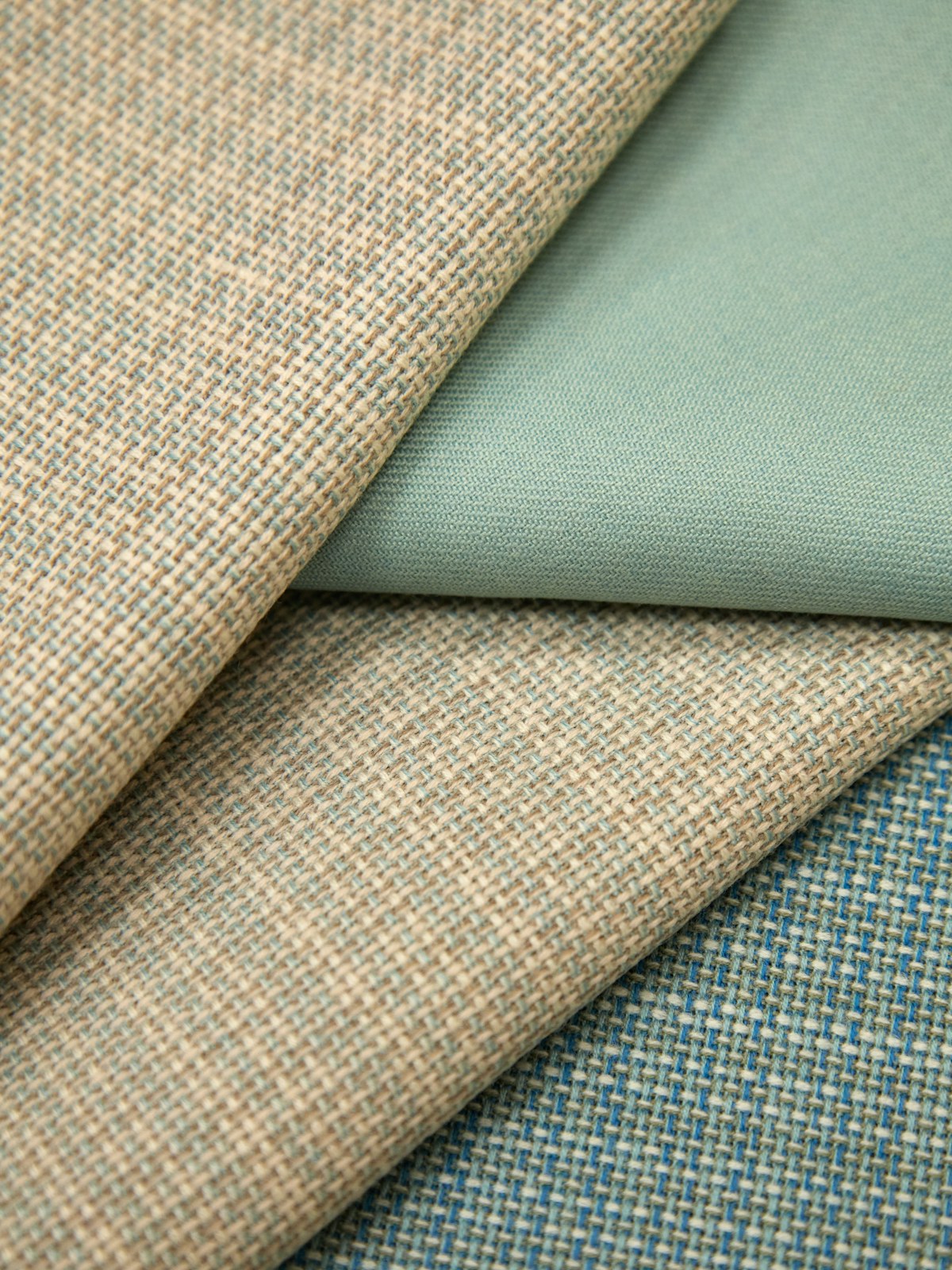
Cotton-rich terry may suit an absorbent, familiar sweatband; polyester blends may help with faster drying and stable color; nylon and elastane can support a closer-fitting knit. These are starting points, not universal rankings. Yarn, loop construction, edge finish, elastic quality, and dyeing can change the result as much as fiber names. Ask for physical samples and compare the finished product on the body, not only a loose fabric swatch.
For prototype versus preproduction sample, the construction decision should be tested against comfort, durability, appearance, and price together. A thicker option may feel substantial in hand but become hot or bulky during activity. A lighter option may lower freight and material cost but disappoint a retail buyer. Record why the selected construction won the comparison. That decision note protects future reorders when materials or vendors change.
Compare the bulk-start sample against the signed golden sample under consistent lighting and with the same measurement sheet.
Use a written test plan rather than an informal opinion. Record sample identification, test date, method, number of cycles, equipment or wearer conditions, before-and-after measurements, photographs, and the pass criterion. Test decorated and packed products, because embroidery, patches, labels, coatings, and closures can change performance. Where a formal laboratory method is relevant, agree the exact method and edition with the buyer and test provider before the test begins.
A single passing specimen does not prove every future production unit will behave the same way. Ask whether the tested piece used production yarn, dye lot, elastic, and decoration settings. If it was an early prototype, plan a further check on a preproduction sample. Keep the approved physical sample in a protected, labeled place so the factory and inspector can compare bulk goods with the same reference.
Brand color may appear different on terry loops, smooth knit, embroidery thread, woven patches, zipper tape, paper sleeves, and screens. Review physical components together in consistent light. State whether Pantone references are targets for the fabric, the logo, or both, and agree how much variation is acceptable. A logo should remain readable at normal viewing distance and comfortable when worn. Test stretch and washing after decoration is applied.
Packaging changes the actual unit delivered to a customer. Specify whether items are folded, paired, bagged, labeled, barcoded, or sorted by team, size, or color. For mixed cartons, provide a packing matrix and a carton label example. Check that a card or sleeve does not hide a defect or crush a plush product. Save approved artwork as a versioned file rather than relying on screenshots sent in a chat.
Ask for a quote that separates sample fees, setup, unit price, decoration, labels, individual packaging, inspection, cartons, and shipping terms. MOQ can change by yarn, dye lot, color, logo technique, and packing style. A low-volume trial often works best with fewer variants and readily available materials. For a continuing retail line, the cost of better testing and cleaner documentation can be repaid by fewer returns and easier replenishment.
Work backwards from the date the products must reach users. Allow time for artwork review, sampling, buyer comments, revised samples, material purchase, production, inspection, packing, and freight. A production promise is only useful if the approval deadline and shipping mode are also realistic. Confirm who signs each stage and what happens when a test or sample fails. Changes made after bulk production starts require a written decision about price and schedule.
A photo approval of one version while the factory holds another can make later inspection arguments impossible to resolve.
A better purchasing decision is: Freeze changes after golden sample approval or issue a new revision with a written impact on price and timeline. Capture this choice in the approved technical pack and purchase order. Ask the supplier to identify any feature that is difficult to repeat or inspect. If the answer is uncertain, run a limited pilot before committing the entire order. Pilot quantities are most useful when they reproduce the intended material, decoration, and packaging rather than simplifying away the risky features.
Before shipment, inspect a representative selection of finished, packed units for dimensions, color, logo placement, seams, stretch, odor, visible damage, labels, barcode readability, pack count, and carton marks. Add function-specific checks from the approved brief. Define defect classes and an acceptance plan before the inspector arrives. Sampling provides evidence about the lot, but it does not mean every uninspected unit is perfect.
Save the approved sample, technical sheet, color references, artwork, test reports, supplier comments, final inspection report, and shipping documents under the same SKU and revision. When the product is reordered, verify what has changed: yarn source, dye lot, elastic, logo file, packaging, or destination rules. A disciplined record turns the first order into a repeatable program and makes expansion into related accessories less risky.
The practical answer to prototype versus preproduction sample is a documented sample and a decision trail, not a vague claim on a product page. Kingspeed Sports can help buyers turn the chosen requirements into an OEM or ODM specification, coordinate samples and decoration, and plan inspection and repeat production. Send a brief with the target user, artwork, quantity, destination, and launch date to start a specific discussion.